
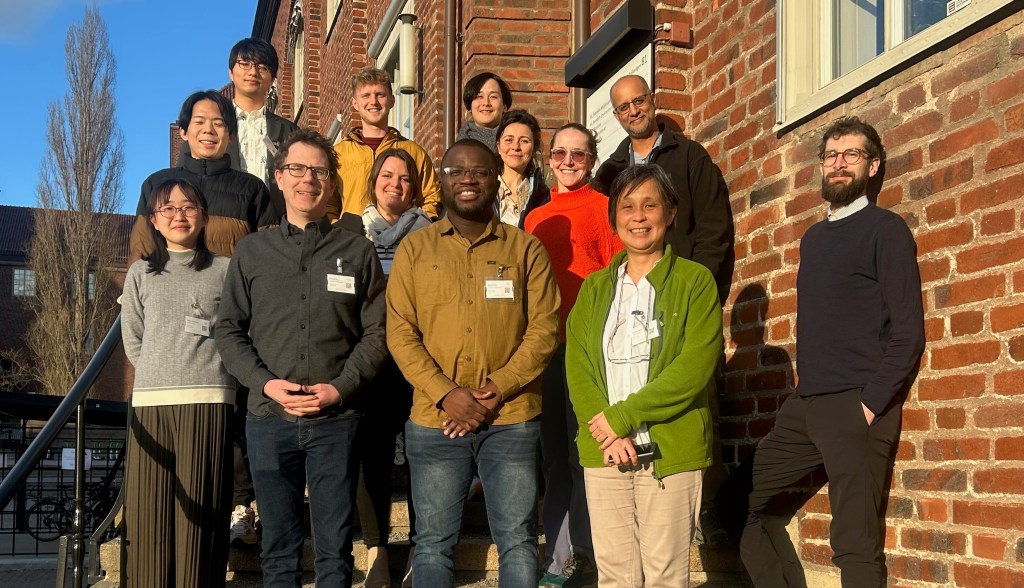
JUST GROW will center equity and justice of UAI within transnational, transdisciplinary research, led by 6 universities across 6 city regions

 Providence (USA) Research Hub
Greater Providence Metropolitan Area (USA), population 1.5 million, and a city region whose food system is covered by both a regional non-governmental organization (NGO), the Rhode Island Food Policy Council (a Consortium stakeholder), and a government food plan (Relish Rhody, 2016; managed by a Consortium stakeholder), both focused on UAI as a route to increase food sovereignty. Food insecurity in this region jumped to 25% during the COVID-19 pandemic, reaching over 35% among communities of color, highlighting the pressing need for equitable pathways to urban food system resilience.
 Randstad (Netherland) Research Hub
The Hague Metropolitan Area (Netherlands), population 8 million. Despite its relatively small land base, the Netherlands is the world’s 2nd largest exporter of agricultural goods, largely due to sustained investment in intensification of agricultural systems. For example, the Westland municipality adjacent to the Randstad is referred to as the “glass city” as 80% of production is under glass houses. However, this system is experiencing increasing challenges—nitrogen loading in waterways, food insecurity, biodiversity decline—that pressure regional governance networks to move beyond the pursuit of efficiency gains through innovation alone (Bos et al. 2013). A relatively new city region, built on reclaimed land, the Randstad has developed a number of relevant food policy frameworks and actions that create an entry point for research. A number of peri-urban municipalities have integrated urban food visions and plans that are actively shaping land use and food production, for example, the Almere municipality region that mandates urban food production alongside new housing development and the Flevo campus, a hub of knowledge intensive UAI. And both Amsterdam and Almere municipalities have proposed food policy plans. The Netherlands thus provides a geographical center of UAI, but also a case for understanding how logics of SSCP change over time.
 Trondheim-Trondelag (Norway) Research Hub
Trondheim-Trøndelag Region (Norway), population 400,000. Among Norway’s most suitable agricultural areas, this region is also experiencing extensive urban sprawl. Due to climatic and topographic constraints, just 3% of Norway’s land area is suitable for
agriculture, posing a significant challenge to localizing food production and increasing resilience. Policymakers have advanced UAI as a solution through municipality grants, policy guidelines, and the Trondheim Competence Center for Urban Agriculture (a Consortium stakeholder). Urban agriculture is also central to Trøndelag’s current status as a European Region of Gastronomy in 2022.

Rhine-Ruhr Metropolitan Area (Germany), population 14 million, is home to many different types of UA projects and numerous Food Policy Councils e.g. in Dortmund (a consortium stakeholder), Cologne, Dusseldorf, Essen, and Bochum, which play an active role in shaping the regional food supply.

Greater Stockholm Region (Sweden), population 2.5 million. The region comprises a number of municipalities with divergent demographics and development and has undergone extensive urban sprawl in recent years. This area also is home to a number of
urban agricultural projects (both conventional and more technical solutions) with varying support from local and regional governments which present a prime opportunity for scientific investigation.

Keihanshin (Kyoto-Osaka-Kobe) Metropolitan Area (Japan); population 19 million, 15% of Japan’s population. As a national historic region, urban and peri-urban agricultural lands are seen as cultural assets and conservation zones. Keihanshin represents a unique
UAI challenge to both preserve historic farming landscapes and provide community support to an aging population (Buhnik, 2017).

 justgrowproject.org