

浜茶フィールドワーク:都市農業における文化的持続可能性をともに編む
By He Yukun, Kiyoyama Yohei, Mr. Ishida (local tea farmer), He Yuzhong
著者:何 鈺昆/清山 陽平/浜茶コラボレーター
Read the full Field Notes report on our Resources Page and pdf linked here Based on research conducted 2024–2025
フィールドノーツ(活動記録)全文はリソースページからご覧ください → ここ 本稿は 2024–2025 年の調査に基づくフィールドノートです
Rethinking Engagement in Urban Agriculture
都市農業への“関わり方”を再考する
Urban agriculture often faces challenges of aging labor, cultural erosion, and difficulties in knowledge transmission. The Hama-cha tea gardens of Kyoto, cultivated along the sandy banks of the Kizu River, embody these pressures. Through an open engagement with local tea farmers between 2024 and 2025, the research team sought to explore how external researchers could enter and collaborate within a field rich in tacit knowledge and cultural depth.
都市農業はしばしば、労働力の高齢化、文化の侵食、そして知識伝承の困難といった課題に直面します。京都の木津川の砂地で栽培される浜茶の茶園は、まさにこれらの圧力を体現しています。2024年から2025年にかけて、研究チームは地元の茶農家との開かれた関与を通じて、外部の研究者が暗黙知と文化的な深みが息づく現場にいかに溶け込み、協働を形づくれるかを探りました。

From Serendipity to Structured Engagement
偶然の出会いから、構造化された関与へ
The Hama-cha project began not as a planned study but through a chance encounter during a preliminary interview. From this informal start, the researchers built relationships that gradually allowed deeper collaboration. Early field visits revealed pressing issues: aging farmers, the decline of traditional tea-picking labor, and the lack of standardized processes that could invite new participants. A critical question was raised during this process: How can research facilitate an understanding of knowledge systems that resist formalization, while respecting local rhythms and practices?
浜茶プロジェクトは、計画された研究としてではなく、予備インタビュー中の偶然の出会いから始まりました。この非公式な始まりから、研究者たちは関係を築き、それが徐々に、より深い協働を可能にしました。初期の現地訪問では、差し迫った課題が明らかになりました。農家の高齢化、伝統的な茶摘み労働の減少、そして新規参加者を招き入れるための標準化されたプロセスの欠如です。この過程で、ある重要な問いが提起されました。すなわち、形式化に抗う(あらがう)知識体系の理解を、研究はどのように促すことができるのか。それも、地域の「リズム」と「実践」を尊重しながら。
The MVP Handbook: Designing a Collaborative Interface
MVPハンドブック:協働のためのインターフェースを設計する
In response, the research team proposed a minimal intervention—the “MVP Handbook” (Minimum Viable Product). Inspired by design thinking, this draft aimed to document and visualize the tacit processes of tea harvesting. The goal was not to prescribe methods but to create an interface that enabled collaboration.
これに対し、研究チームは最小限の介入、すなわち「MVPハンドブック」(Minimum Viable Product:最小実行可能プロトタイプ)を提案しました。デザイン思考に着想を得たこの草案は、茶摘みの暗黙知のプロセスや判断基準を記録し、可視化することを目的としました。その狙いは、方法を「規定する」ことではなく、協働を「可能にする」インターフェースを作ることでした。
This simple proposal—co-authoring a tea-picking manual—became a testing ground for mutual understanding. Through co-design, researchers and farmers explored how external participation might lower barriers without disrupting established cultural practices.
「茶摘みマニュアルを共同執筆する」というこのシンプルな提案は、相互理解のための試金石となりました。共同設計(コ・デザイン)を通じて、研究者と農家は、既存の文化的実践を妨げることなく、外部参加のハードルをいかに下げうるかを探りました。

Field Practice and Observation: The Rhythm of Work
現場実践と観察――仕事のリズムを学ぶ
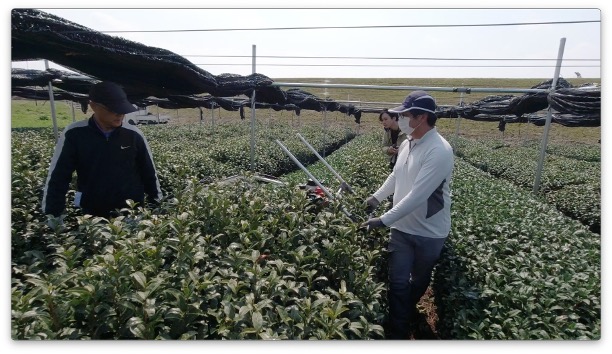
Over several months, the team observed and participated in key moments of tea cultivation: spring pruning, the first flush harvest, and tencha processing. These engagements revealed how physical, sensory, and relational knowledge intertwine in the production process. Each step—from aligning pruning heights to timing factory steaming—reflected centuries of cultural wisdom.
数ヶ月にわたり、チームは茶栽培の重要な瞬間に立ち会い、また参加しました。春の剪定、一番茶の収穫、そして碾茶(てんちゃ)の加工です。これらの関与は、身体的・感覚的そして関係的な知識が、生産プロセスの中でいかに絡み合っているかを明らかにしました。剪定の高さを揃えることから、蒸し工程のタイミングを見極めることまで、各工程が何世紀にもわたる文化的な知恵を反映していました。
The researchers’ involvement in these everyday tasks created opportunities to transform observation into collaboration. Rather than extracting data, they engaged in collaborative and mutually beneficial acts —working, watching, and reflecting alongside the farmers.
研究者が日常の作業に関与することは、観察を協働へと転化する契機を生みました。データを「抽出する」のではなく、彼らは農家とともに働き、見つめ、内省するという、協働的かつ互恵的な行為に従事したのです。

Theory in Practice: The ‘Third Question’ and Distributed Co-Creation. 実践における理論:「第三の問い」と分散型共創
Traditional research often starts with predefined questions or interventions. In contrast, the Hama-cha team developed what they call a “Third Question”—a mediating question that belongs to neither the researcher nor the farmer, but to the space in between. This framing allows both sides to collaborate without forcing consensus or predefined goals.
通常の研究は、しばしば事前に定義された問いや介入から始まります。対照的に、浜茶チームが「第三の問い」と呼ぶ枠組みを導入しました。それは、研究者にも農家にも属さず、その「中間」の空間に存在する、媒介的な問いです。この枠組みは、合意や事前の目標設定を強いることなく、双方が協働することを可能にします。
Building on this, a new concept of “Distributed Co-Creation” was introduced, where diverse actors participate in a shared process in building a mutually beneficial tool with the agreement that there may be different agendas or motivations from the outset. The MVP Handbook served as both a prototype and a platform for this new form of shared engagement.
これを土台に、「分散型共創」という新しい概念が導入されました。これは、多様な主体が、当初から異なる思惑や動機があるかもしれないという合意のもと、相互に有益なツールを構築する共有プロセスに参加するものです。MVPハンドブックは、この新しい形の「共有された関与」のためのプロトタイプであり、かつプラットフォームとして機能しました。

Cultural Sustainability and the Future of Urban Agriculture
文化的持続可能性と都市農業の未来
The Hama-cha project underscores that cultural sustainability in urban agriculture depends not only on preserving tradition but also on enabling new forms of participation. By constructing small yet functional structures for collaboration, such as the MVP Handbook, researchers can co-design resources and systems in a community that connect local knowledge to broader academic and civic networks.
浜茶プロジェクトが強調するのは、都市農業における文化的持続可能性は、伝統の保存だけでなく、新しい参加形態を可能にすることにもかかっている、という点です。MVPハンドブックのような、小さくとも機能的な協働の「構造」を構築することで、研究者はコミュニティの中で、地域の知識をより広範な学術的・市民的ネットワークに接続するリソースやシステムを共同設計することができます。
While the future of the MVP Handbook remains open, the process itself demonstrates how mutual learning and minimal co-creation can sustain both cultural heritage and adaptive innovation in agricultural practice.
MVPハンドブックの未来はまだ開かれたままですが、そのプロセス自体が、相互学習と最小限の共創(ミニマル・コクリエーション)が、いかにして文化遺産と農業実践における適応的イノベーションの両方を支え得るかを示しています。

Conclusion: Toward a Methodology of Open-Ended Engagement
結論:開かれた関与(オープンエンド・エンゲージメント)の方法論に向けて
This account of Hama-cha fieldwork shows that meaningful research around cultural sustainability in urban agriculture can begin without predefined frameworks and hypotheses. By cultivating transparent collaboration, openly sharing values and intentions, and establishing a respect for uncertainty, research can become a living process of cultural exchange. This non-linear, creative model may hold lessons for sustainability practices far beyond the tea fields of Kyoto.
この浜茶フィールドワークの記録は、都市農業における文化的持続可能性をめぐる有意義な研究が、事前に定義された枠組みや仮説なしにでも始められることを示しています。透明性の高い協働を育み、価値観や意図をオープンに共有し、不確実性への敬意を根づかせることによって、研究は文化交流の生きたプロセスとなり得るのです。この非線形で創造的なモデルは、京都の茶畑を越えて、持続可能性の実践に向けた示唆を与えるはずです。
 justgrowproject.org