
Authors: Stijn van den Oever, Beste Sabir Onat, Adam Calo
*An introduction from Stijn:
Over the past year and a half, I had the opportunity to work for the JUST GROW project at the Radboud University, first as a research assistant, and later as an intern. It has been an incredibly enriching experience. I’ve learned so much about urban agriculture, doing research in practice, and what it means to work collaboratively on socially engaged academic work.
It’s been a real pleasure to get to know and learn from everyone in the JUST GROW team. I want to especially thank Dr. Adam Calo and Dr. Beste Sabir Onat, whose guidance and insights have deeply shaped both my work within the project and this blog in particular. I also want to sincerely thank all the urban farmers, community members, food activists and civil servants who shared their
experiences with me. Their stories are the heart of this work.
This blog post is based on my fieldwork in the Amsterdam region, conducted as part of my time with the JUST GROW project. The insights from the Trøndelag region come from the work of my colleague Dr. Beste Sabir Onat, who generously shared her findings with me. The blog was first published on Dr.
Adam Calo’s Land Food Nexus Substack.
_______________________________________________________________________
“Can urban agriculture live up to its inclusivity aspirations?”
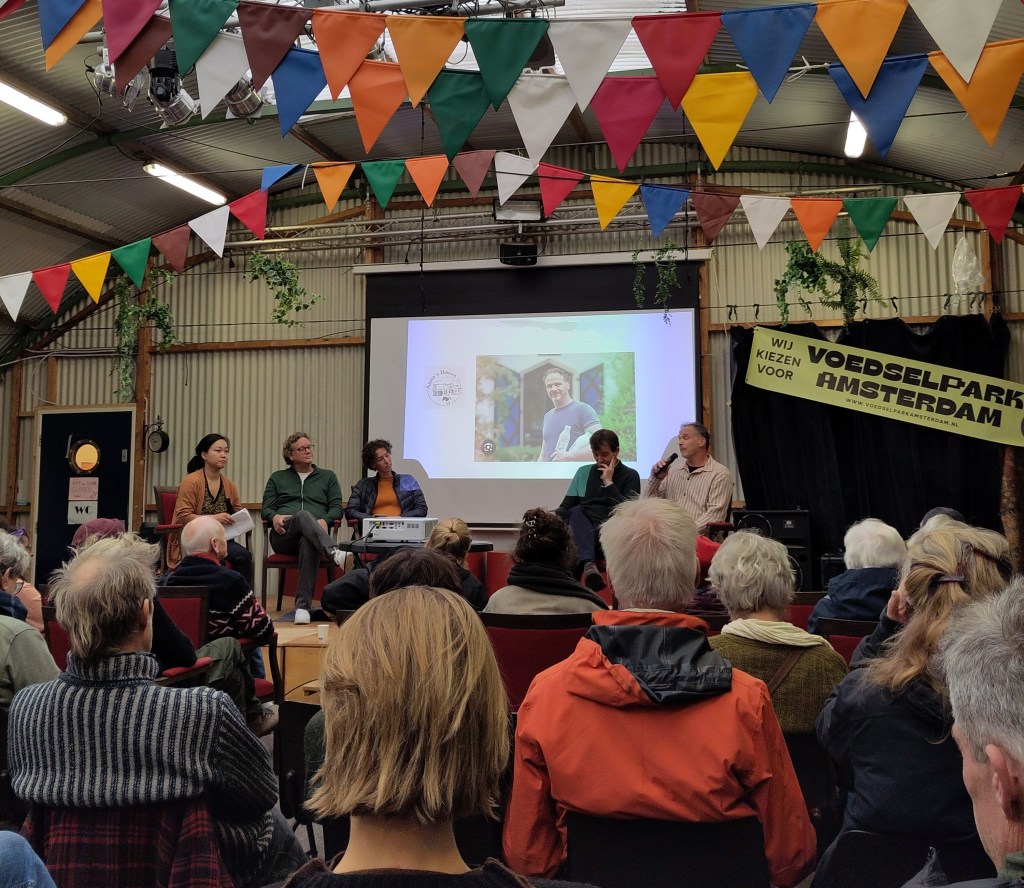
In December 2024, I attended the “Urban Agricultural Day” at the NoordOogst site, an urban agricultural project in Amsterdam. It was an exciting day full of optimism, where people discussed the future of urban agriculture. A wide range of common issues were brought up, from broader themes like strategies for claiming space in neighborhoods for food production, to very local challenges such as the fight led by Voedselpark Amsterdam to protect what one community leader described as “the last fertile land of Amsterdam”.

Yet as I moved through the event, I couldn’t shake off a growing discomfort. Despite the event’s open and welcoming atmosphere and the organisers’ sincere efforts to make it accessible, with free entrance, food, and an easily reachable location, the crowd was strikingly homogenous. The vast majority of attendees were white, middle-class professionals. In a city as culturally and socioeconomically diverse as Amsterdam, I found this lack of representation hard to ignore. It made me question: how can an event so focused on justice and inclusion end up replicating existing patterns of privilege?
This tension is not new. In Beyond the Kale: Urban Agriculture and Social Justice Activism in New York City, Reynolds and Cohen highlight how urban agriculture often reproduces racial and class inequalities, despite its progressive aims. Their work underscores that without intentional efforts to centre marginalized voices, even well-meaning initiatives risk reinforcing the very exclusions they seek to challenge.
Such exclusionary mechanisms sometimes allow urban agriculture to be dominated by mobile, white, middle-class professionals, rather than the communities it aims to empower. This tension has stayed with me, not just as a researcher, but as someone who believes in the transformative potential of urban agriculture. Through this blog post, I want to unpack some of the contradictions I’ve observed and wrestled with in my research. I thus argue that if the urban agriculture movement wants to fulfill its promise of inclusivity, it must take a closer look at who gets access to land, who does the labour, and who benefits. Without such critical reflection, I believe there’s a real risk of reinforcing the same class and racial privileges it seeks to challenge.
As part of the JUST GROW Project team, I’ve had the chance to closely examine the systemic barriers to land access and labour justice in urban agriculture. This research has not only deepened my understanding but also challenged some of my own assumptions about inclusivity and sustainability in food systems. For this blog post, I thus draw on insights I have gained from research done in the JUST GROW project, in which we examine how urban agriculture can be furthered in a sustainable and socially just way.
Specifically, I base my argument on our qualitative research from the Trøndelag Region in Norway and the Amsterdam Region in the Netherlands, where we analyze and deconstruct systemic barriers to land access and labour justice. I thus provide a cross-national perspective on how these tensions play out in two different urban contexts. At the end of the blog, I will highlight two emblematic cases that were purposefully designed to overcome these structural barriers to just and sustainable urban food systems: a government supported Norwegian organization and a government opposing Dutch community.
The fight for space in the city
One of the most pressing challenges in urban agriculture is securing access to land. In cities, every vacant plot is contested, and urban farmers, especially newcomers, face fierce competition shaped by market forces. To legitimize their presence, they often appeal to the broader social and ecological benefits they provide: community building, education, healthy food, climate adaptation, and green space. These aims often align with municipal ambitions. Yet urban farms rarely generate the high financial returns required in a land market dominated by profit logic. As a result, they’re frequently outcompeted by more lucrative developments.

Even when urban farmers secure land, they often face short-term leases, which are appealing to landowners who can regain access quickly. For farmers, these arrangements mean less stability and little incentive to invest in long-term sustainability, especially practices like soil regeneration, which take years to yield results. For example, a Scottish farmer moved to the Trøndelag region in search for greater security. Yet he found himself a similar position: renting land without a written contract, renewed verbally every three months. “Really, my security is three months,” he said. “And I feel that is not actually enough anymore… This temporary status is not good for farming practices either.”
To cope with land insecurity, some urban farmers have developed mobile solutions that reduce their dependence on fixed plots of land such as vertical or floating farms. In Amsterdam, initiatives like the Kaskantine, a pop-up urban farm, temporarily occupy vacant lots. Such models make it easier to relocate when leases end and reduce dependence on fixed land. Mobility doesn’t just apply to farms, but to farmers too, many of whom move repeatedly to continue their work. While the flexibility and adaptability of urban farmers is to be celebrated, mobility itself is a clear indicator for bad land access. Mobility also reinforces exclusion, which we see in both the regions of Trøndelag and Amsterdam, since only those with the time, money, and flexibility to relocate can stay in the game. Those without such resources risk to be left out.

Who gets to be an urban farmer?
How urban farmers engage in mobility is not the only way exclusion gets reinforced. Wages are often around the legal minimum, and often with limited paid hours, making it difficult to earn a living. Many urban farmers depend on a partner’s income or other forms of financial security, such as savings or a pension. Urban farms also frequently depend on unpaid or underpaid labour, including volunteers and interns. While this helps farms survive, it tends to exclude those who can’t afford to work for free or accept financial instability. Economic privilege thus becomes a de facto requirement for participation.
To remain financially viable, many urban farmers diversify their income by drawing on their urban surroundings. They offer workshops, tours, childcare, or hospitality services alongside farming. A dairy farmer on the outskirts of Amsterdam, for example, runs a childcare, a B&B, a farm stand, school tours, and lamb-petting days that attract thousands. “Other farmers often say, ‘you and your petting zoo,’” he joked. “But I don’t care, I like what I do.” For him, proximity to the city offers valuable ways to supplement his income. Still, this kind of diversification demands time and networks, resources not available for everyone. It raises the question: is this hybrid, entrepreneurial model of urban agriculture the one we want, and how inclusive is it really?
When green isn’t for everyone
Taken together, land insecurity and exploitative labour systematically filter out those without pre-existing financial security, institutional support, or social capital. As a result, participation in urban agriculture becomes increasingly limited to white, middle-class professionals who can afford precarity, subsidize their farming through other income, or navigate bureaucracies effectively. This process leads to a form of green exclusion where access to urban agriculture is shaped less by intention and more by structural conditions, reproduce existing inequalities. While no actor may intend to exclude, the cumulative effect is that those who could benefit most from just and sustainable food systems, are systematically marginalized or overburdened. This exclusion is further masked by the normative framing of urban agriculture as inherently inclusive and democratic, making it harder to see and harder to address.
Solutions: with or without the state
Addressing these exclusions requires more than good intentions or symbolic gestures. I found myself to quickly turn to the state when markets failed to deliver fairness. But during my research at JUST GROW, I’ve become increasingly aware of the power of community-led resistance and civil society. I’m not alone in this thinking, a growing body of literature is encouraging alternative food movements to broaden their focus from organic farming or bee-friendly practices to fundamentally question who owns the land, who has the right to farm it, and under what labour conditions food is produced; because if they don’t, they risk reproducing inequalities.
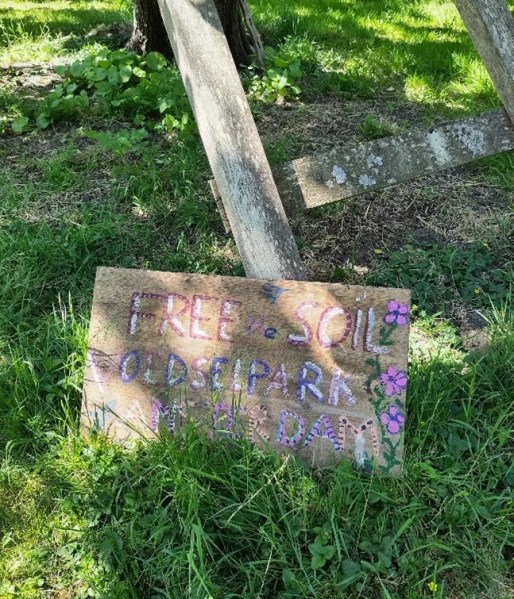
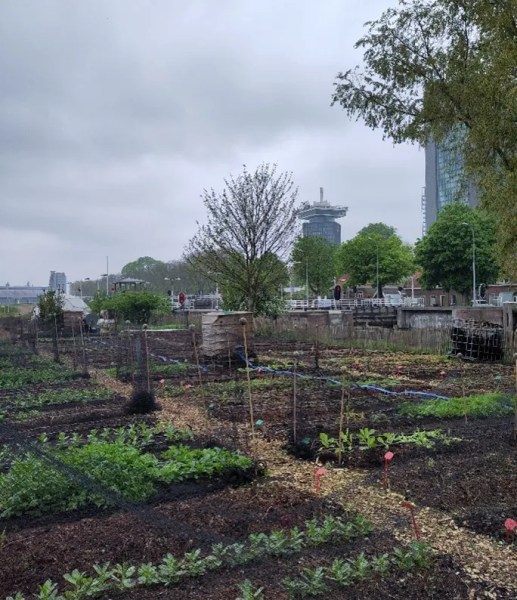
The struggle over the Lutkemeerpolder and the formation of Voedselpark Amsterdam offers a powerful example for local food movements of how it should be done. For years, local authorities advanced plans to transform the polder into a business park, despite limited economic demand and widespread public resistance. A movement of activists, residents and environmental groups was established to save as much agricultural land as possible. After helping a small organic care farm retain a portion of its land, they formalised their movement as Voedselpark Amsterdam. They successfully bid for 9.5 hectares in the Lutkemeerpolder to establish a regenerative, non-profit urban agriculture hub. This victory was more than a win for green space; it was a rejection of market-driven urban planning in favour of community-led food sovereignty. As one of the movement leaders noted, “Voedselpark belongs to everyone and is for everyone. We celebrate what we have achieved and mourn what has been lost.”
However, the state can still play a crucial role in removing barriers to inclusive urban farming. They could offer long-term leases, set land prices based on public benefit rather than market rates, and provide subsidies or income support for farmers who deliver social and ecological value. This kind of systemic reform is not something urban agriculture groups can achieve on their own, nor should they be expected to. Rather, it requires structural change and political willingness to treat urban agriculture as a serious and legitimate land use. In Amsterdam, that recognition remains limited. The government continues to charge market-level rents and utilise short-term contracts. Worse, it regularly supports other types of land use in the city, such as sports fields and dog parks, and provides structural support to conventional farms, making it nearly impossible for urban farmers to compete. Rather than leveling the playing field, the Dutch state thus reinforces the very inequalities it should aim to challenge.
However, when the state does tip the scales in favor of urban agriculture, the path toward inclusion becomes possible. In Norway, the Vollgård farm in Trondheim shows how public involvement can support inclusive urban farming. Located on public land and operated by the Trondheim municipality in collaboration with local organizations, Vollgård serves as an inclusive space that combines food production with education, care services, and community integration. The farm offers activities and employment opportunities for people with disabilities, mental health challenges, and those outside the labour market, while also engaging schools, volunteers, and the broader public in urban food production. By securing long-term land access, offering stable funding, and embedding the farm within broader social and environmental policies, the government ensures that urban agriculture serves the public good and not just private interests.
Conclusion: a just food future
If you ask me, urban agriculture is at a crossroads. It can either remain a well-meaning but exclusionary practice shaped by market logic, or it can become a truly transformative force that challenges inequality at its roots. But this won’t happen on good intentions alone. It requires policy change, public investment, and grassroots pressure that refuses to settle for green aesthetics without social justice.
In our research in the Amsterdam region, we’ve seen that urban agriculture can drive more inclusive and sustainable food systems, but only when it fundamentally challenges who owns the land, who has the right to farm it, and under what labour conditions food is produced. Additionally, our research in the Trøndelag region shows that when the state does actively support urban agriculture through long-term land security and clear, consistent support, urban agriculture can truly become an inclusive, sustainable, and just force for change.
For me, urban agriculture still holds immense transformative promise, but only if we’re willing to ask the hard questions and challenge not only systems of power, but also our own assumptions. I wrote this piece because I believe in asking better questions, especially about who gets a place in urban agriculture, and who is left behind.
 justgrowproject.org