

Authors: Beste Sabir Onat, Adam J. Calo, Stijn van den Oever, Heidi Vinge
Despite rapid urbanization and the high commercial value of city-center spaces, Voll Gård in Trondheim, Norway, a pedagogical farm and competence center for urban agriculture, stands as a testament to the power of urban agriculture. Supported by policymakers and the government, this unique space fosters both community well-being and hands-on learning.
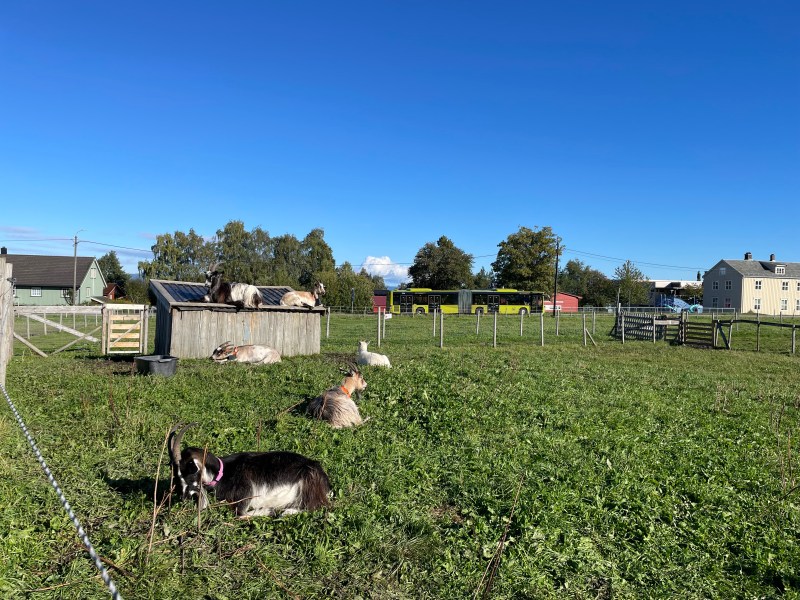
The JUST GROW hub in Norway and the Netherlands are researching land access and labor equity in urban agriculture. Through our work, we have explored and documented several key case studies. Here, we highlight Voll Gård, a noteworthy initiative that provides citizens and schools with direct access to urban agriculture. We will discuss its potential as an educational space and the broader implications of its governance model.
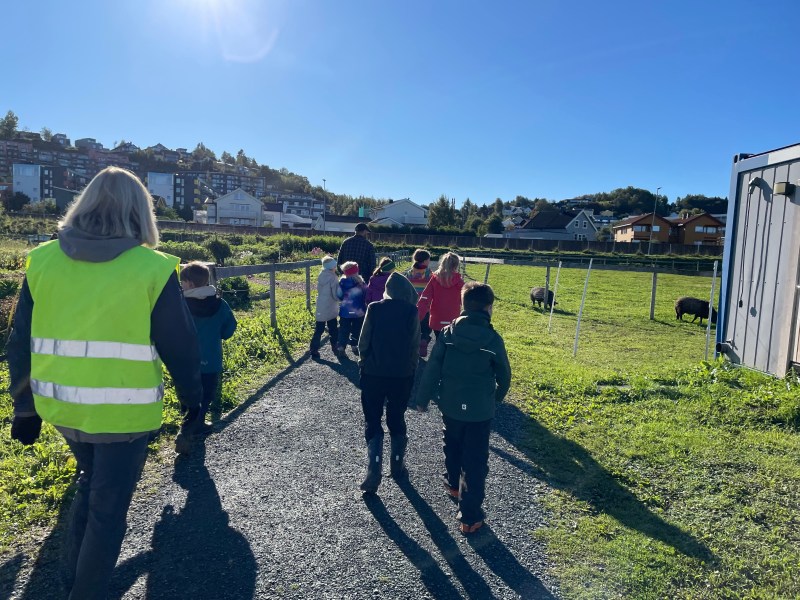
Voll Gård: A Pedagogical Space for All
Voll Gård is more than just a farm – it is a community-driven learning hub that brings together families, students, urban dwellers, and farmers. Operating as a grassroots organization, it bridges the gap between urban life and sustainable food production. The farm serves as a model for land accessibility and participatory urban agriculture, demonstrating how bottom-up policies can empower local communities.
By examining Voll Gård as a case study, we explore several key questions:
- How can cities shape our understanding of food and sustainability?
- How do physical spaces function as educational tools?
- Can urban farms become laboratories for learning and community engagement?
- How can urban planning policies incorporate pedagogical spaces like Voll Gård?
- How might labor and land access lead to equity?
Through this discussion, we aim to inspire governments and policymakers to develop inclusive and equitable urban agriculture strategies that empower citizens and promote sustainability.
A Green Embassy in the Urban Landscape
Voll Gård’s history reflects the changing landscape of Trondheim. Sixty years ago, this area was dedicated to professional agriculture, producing cereals, milk, and a variety of crops. Then, an idea developed to make the area into an agricultural space for all the city to enjoy:
‘From the county administration level, the idea came that this is, kind of a green embassy for agriculture towards the city. We want to show how we do food production, both in livestock and growing vegetables, cereals, and everything. So, the organization Stiftelsen Voll Gard was founded. They bought the land from the state in 1990’.
Today, it remains a “green embassy” for agriculture within the city, demonstrating food production methods, including livestock farming and vegetable cultivation. Over time, the land around the farm has become more dense with mostly residential projects. ‘The amount of the land use categories, built-up area, transport and communication have increased, with respectively 27,9 % and 29,4 %. Fully cultivated land has in the period decreased with 5,6 %. There has also been a decrease in agricultural land use categories surface cultivated land, and infield pasture area’(Huso, 2021). The research traces Trondheim land use changes from 2003 to 2019.
The farm operates under a collaborative governance model, involving both county and municipal authorities. It is supported by organizations such as the Farmers’ Union, Trøndelag County Governor (Statsforvalteren), 4H Educative Gardens, and Trondheim Municipality. This multi-level support structure allows Voll Gård to function as an inclusive and sustainable urban farming initiative:
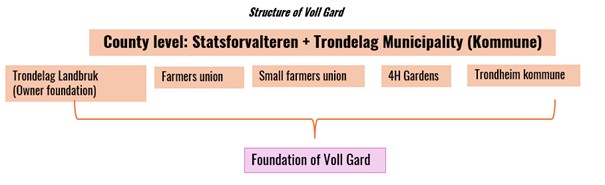
Urban Agriculture and Policy Support in Trondheim
Urban agriculture in Norway focuses on connecting people to the land and fostering an understanding of food production. This is reflected in municipal policies that provide funding for UA projects, enabling citizens to access land for cultivation. Some residents who already have plots to grow food can apply for the funds, while others who do not own the land, may enter into lease agreements with teams and organizations that want to start a joint cultivation project. This fund has been in operation for nine years and the total budget in all years is 8.5 million NOK.
Voll Gård exemplifies how urban planning can integrate sustainable and community-based agriculture. By maintaining this fertile land in the city center, Trondheim ensures that UA remains a vibrant, educational, and inclusive practice. The Trøndelag region’s governance framework demonstrates Norway’s commitment to securing its food production, to foster knowledge and community participation.
How Voll Gård Operates: A Holistic Approach
The farm’s operational structure is designed to be productive, inclusive, and educational. Key activities include:
- Market gardening & farm sales: Selling fresh vegetables and other farm products.
- Educational programs: Training sessions on composting, soil health, and sustainable agriculture for students, citizens, and small-scale farmers.
- Farm experiences: Welcoming families to engage with farm animals and learn about rural life.
- Pedagogical planting: Cultivating crops like potatoes and carrots specifically for educational purposes.
- Community-Supported Agriculture (CSA): A membership-based program where city dwellers can actively participate in farming and harvest their own produce.
- Capacity Building: By cooperating with Trondheim Municipality and additional various municipalities in Trondelag region, and also including NAV (Norwegian Labor and Welfare Administration) in this process; introducing farming practices to people, who would like to experience and start working in the farms.
Capacity building is directly linked to the education theme, under the umbrella of urban pedagogy. We might highlight this crucial process where interested citizens experience urban agricultural knowledge accompanied by practice in the field, gaining confidence to start on a new job in urban farming. This is an important partnership where the NAV and the farm work together, offering volunteering opportunities for those who would like to experience this, apart from joining the CSA.
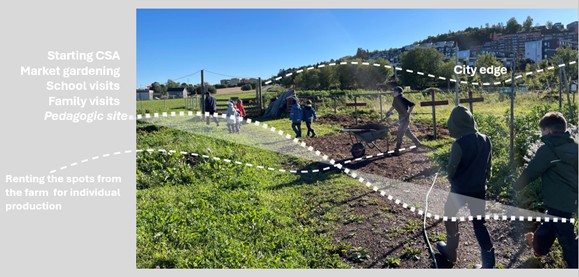
Voll Gård operates as an interactive, hands-on learning environment, fostering community involvement and knowledge exchange through a range of relations and activities, as described in the figure below:
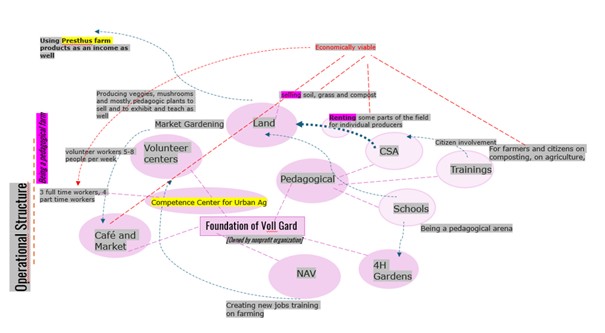
Image 4. Operational structure of the farm.
The image above is a map analysis of the operational structure and flow of the farm. We are examining the following questions: How does the farm support itself? What kind of labor is working here? Do they work on a voluntary, part-time or full-time basis? How can this farm create opportunities for people who would like to take part in farming practices? In terms of educational and capacity building, and as a networking space for the urban farmers, the farm holds a crucial space for the urban agriculture network in Trondelag region.
Space as a Third Teacher
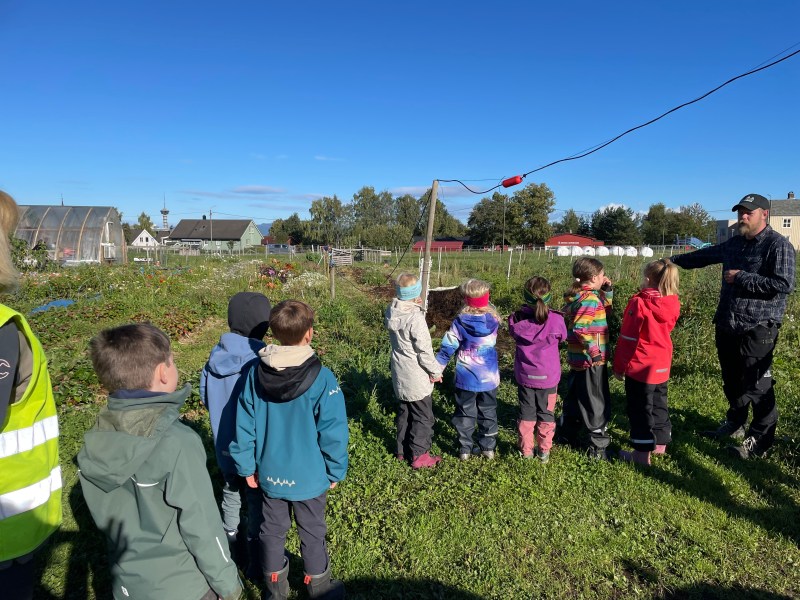
At Voll Gård, learning extends beyond traditional classrooms. The farm itself functions as a “third teacher”, where the physical environment, social interactions, and ecological systems create a dynamic educational experience.
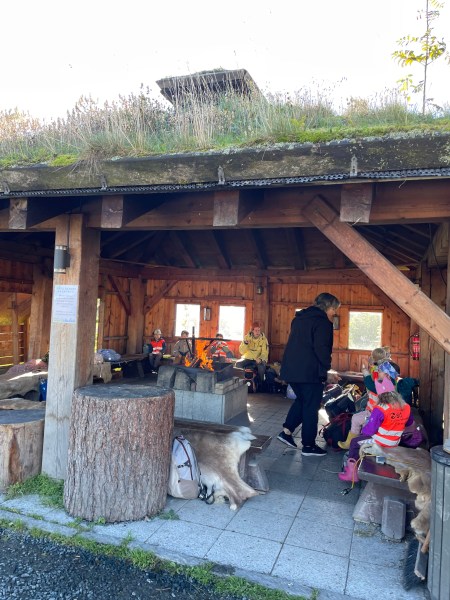
Visitors gather in open spaces, around fire pits, and within the school garden, where students and educators engage with nature through experiential learning. The space serves as a living laboratory where food is not just a commodity but an agent of transformation shaping our lives, communities, and sustainable practices.
A Model for Inclusive and Sustainable Urban Agriculture
Voll Gård represents a successful fusion of urban planning, education, and community-driven agriculture. By integrating sustainable practices into the city’s governance framework, Trondheim sets an example for equitable and participatory urban agriculture.
Through this case study, we hope to inspire more cities to adopt similar models, fostering inclusive, productive, and educational agricultural spaces within urban landscapes.
Final Thought: Can Space Shape Us?
Voll Gård challenges us to rethink the role of space in learning and community-building. When urban agriculture is supported by policies and integrated into urban planning, it becomes more than a food production site – it transforms into a hub for knowledge, sustainability, and collective growth.
What if more cities embraced urban farms as “third teachers”? What if food production was seen not just as an industry, but as a common good that connects people, land, and learning?
These are the questions we all can explore as we envision more inclusive and resilient urban futures.
 justgrowproject.org