
Authors: Ann-Kristin Steines, Annika Eisenberg, Barbara Schröter
The JUST GROW hub in Dortmund, Germany is researching how urban agriculture can contribute to food security. Over the past few months, we have been conducting interviews with different actors involved in urban agriculture in Dortmund and the surrounding area.
We would like to give you an insight into the first results of our research and introduce you to three initiatives: the Food Policy Council Dortmund und Region e.V., the district market garden GrünFrau and the Community-supported agriculture “Kümper Heide”. We asked these three initiatives how urban agriculture can contribute to food security and promote greater justice in our region’s food system.
Read for yourself what makes these initiatives unique and how they are positive examples of integrating equity into urban agriculture.
***

Food Policy Council Dortmund and Region
The Food Policy Council Dortmund and Region e.V. is an association of citizens, initiatives, associations, companies and political actors who are committed to shaping a future-proof, fair and sustainable food system in Dortmund and the surrounding region. The association was founded in March 2022 in a small group and has been growing steadily ever since. The Food Policy Council sees itself as a platform for the exchange and networking of actors along the entire value chain.
A special feature of the FPC is the close cooperation with the city of Dortmund, which has created a separate position for the field of action “Agriculture and Nutrition” in the Environmental Office as part of the Coordination Office for Climate Protection and Adaptation to Climate Change in order to bring the topics of nutrition and agriculture more into the focus of politics and administration. This position is closely tied to one of the aims of the Just Grow project – to understand how a governance structure evolves to support a pathway for the responsibility for action, upheld by the appropriate policy authority to act.
The work of the Food Policy Council (FPC) focuses on promoting a socially and ecologically sustainable transformation of food and agriculture. The aim is to strengthen local structures, promote food sovereignty and increase the resilience of the regional food system. Through education, information and policy work, sustainable and fair food practices are to be anchored in the population. For this purpose, a large number of people and actors from the food and agricultural sector are brought together who are committed to a more sustainable and future-proof food system: from agriculture, production, processing and marketing to food rescue, urban gardening, education, consultancy and research. This includes achieving food security in an equitable manner, taking into account access, distribution and knowledge for all.
At monthly open meetings, the FPC organizes visits to different places highlighting initiatives that deal with food issues in Dortmund and invites everyone who is interested and has the time to get involved in volunteer work on food issues in order to make a difference in Dortmund and the region and to make the food system more ecological, fairer, healthier and more resilient!
What members of the Food Policy Council Dortmund and Region have to say:
“I would say that the main reason why urban gardening and urban agriculture is so important is that it offers so many other benefits in addition to food production. Starting with the fact that you really have green oases in often densely populated areas that are maintained by a community, where people come together, but where the microclimate is also positively influenced by cooling and shading and unsealing (i.e., removing impermeable paved surfaces so that water can get into the ground).”
“In order to achieve more justice in the food system, I believe that the link between producers and consumers must be significantly strengthened. Consumers in the city should be empowered to make responsible decisions about their food consumption. To do this, they need to know: What is behind the products? How are they grown? Can they even have a say at all? Currently, we often only find very limited choices on supermarket shelves and the conditions under which the food is produced often remain hidden.”
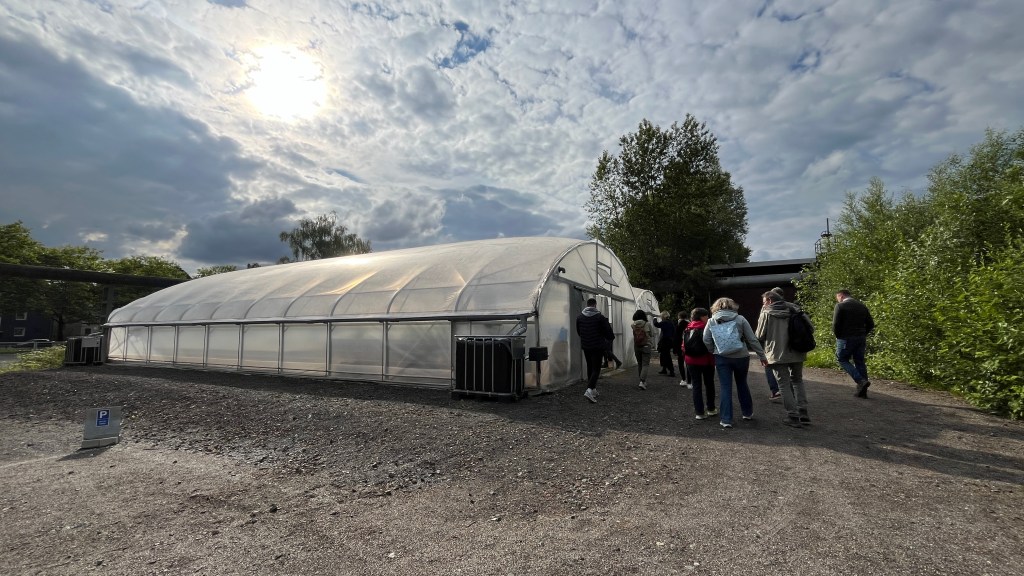
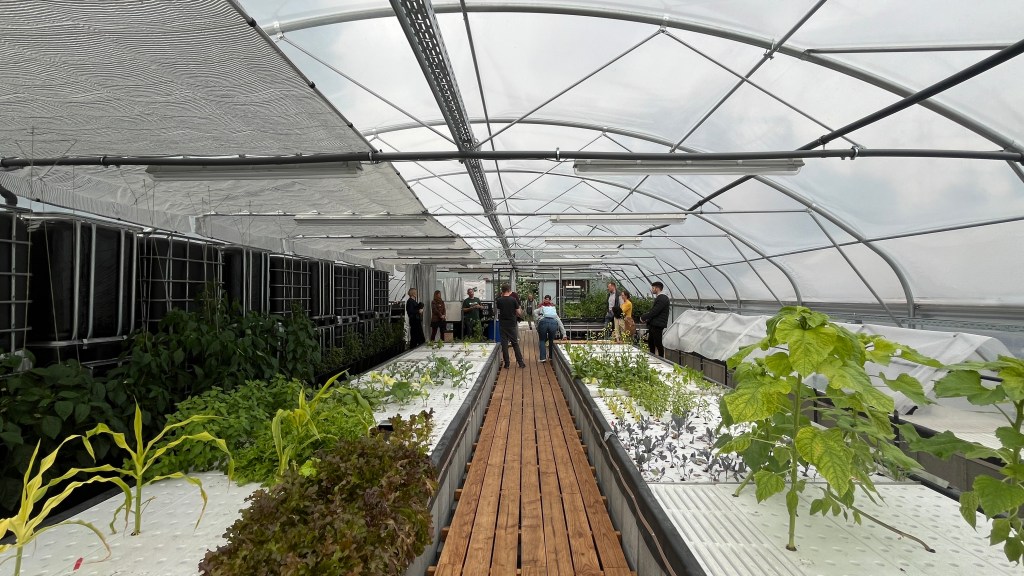
Insight into one of the monthly open meetings. Visit of “Hansaponik” aquaponics plant on the industrial monument “Kokerei Hansa” (a former coking plant).
As a member of the Food Council, we visited the aquaponics plant “Hansaponik” at the industrial monument “Kokerei Hansa” (a former coking plant). Here, fruits and vegetables are grown aquaponically – without soil – in a nutrient cycle with fish. This has the advantage that contaminated sites of former industrial plants, of which there are several in the Ruhr area, can be used for growing food. In future, residents and interested organizations will be able to rent and plant the individual racks.
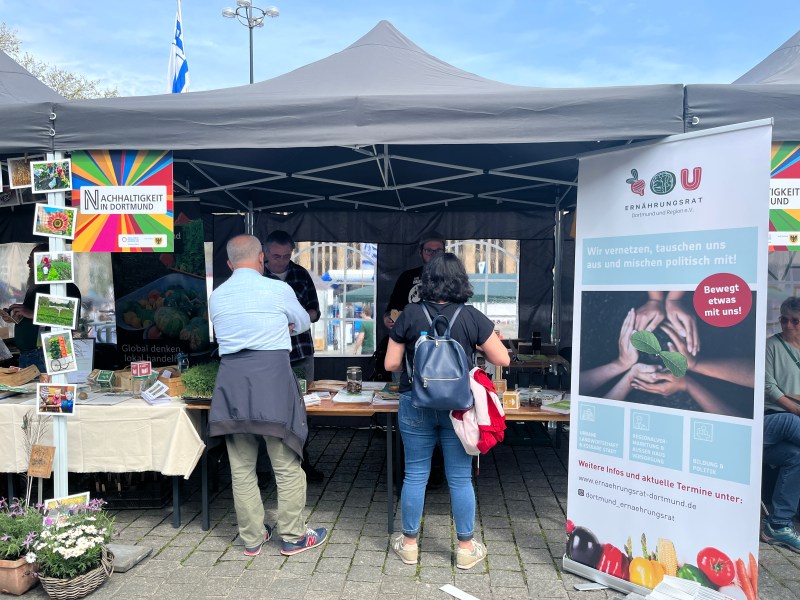
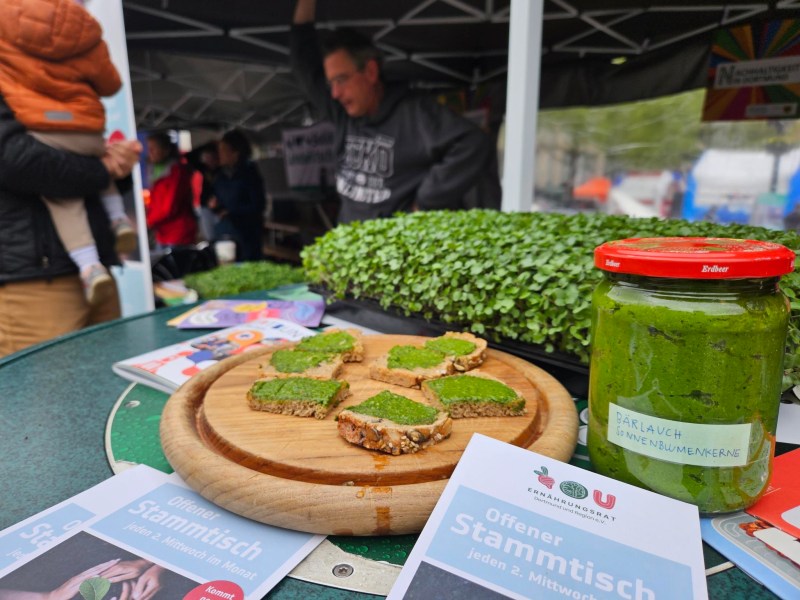
Information booth of the Food Policy Council Dortmund at the DortBund City Festival with homemade pesto available to sample
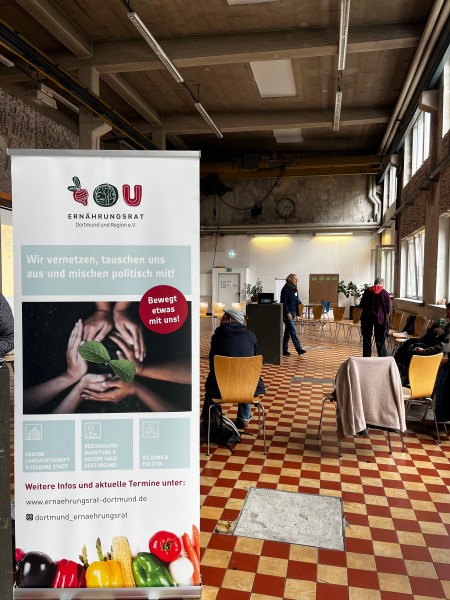
In November 2023, Ann-Kristin took part in the workshop “Transformation of the food system, but how?” organized by the Food Council with many committed and interested people from Dortmund’s food system.
***

District market garden GrünFrau
The district market garden GrünFrau in Dortmund is an urban gardening project that promotes sustainable urban development and organic farming. It is a special place that combines food production and social participation.
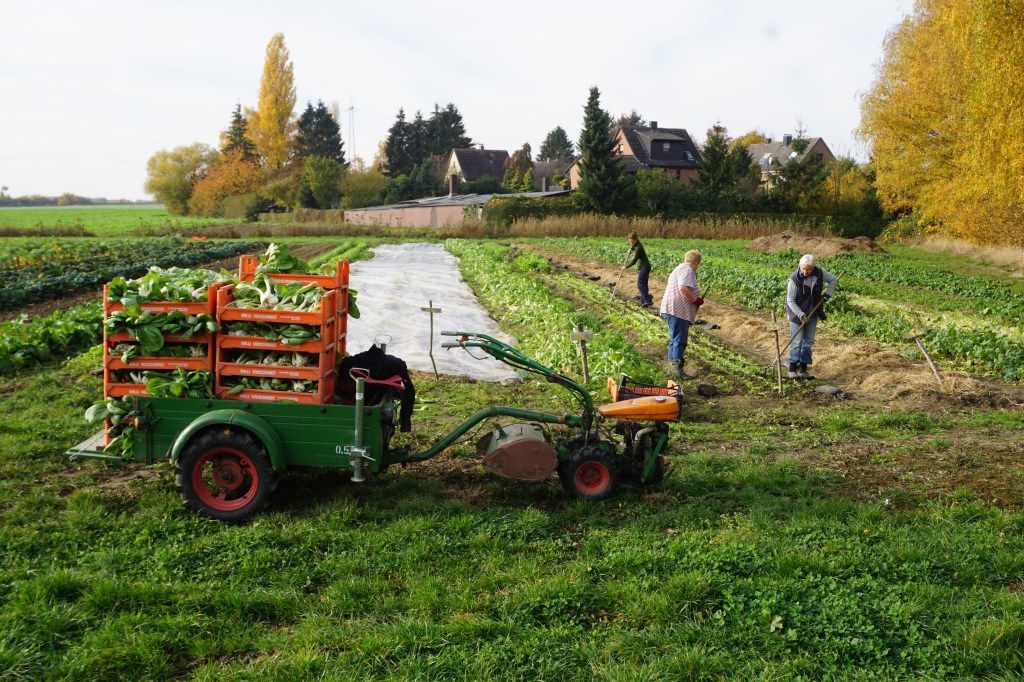
On an area of approximately 5500m², vegetables are grown in more than 100 raised beds according to ecological principles and without the use of chemical fertilizers or pesticides. The project aims to provide a new pathway to employment: about 15 women, who have had difficulty finding jobs in the existing labor market, are given a valuable job opportunity to support them in (re-)entering the labor market and to network with other women and build a community. Under the expert guidance of two experienced gardeners, they build raised beds, care for the plants, harvest and maintain the area.
The goal of GrünFrau is not only to raise awareness about healthy and environmentally friendly nutrition, but also to support local community development and improve the quality of life in the district. By being directly involved in the production of food, participants learn about and appreciate the challenges and benefits of sustainable agriculture while strengthening social bonds.
In addition to growing food, GrünFrau sees itself as a social gathering place that brings together people from different generations and cultures. Regular activities such as transcultural cooking, reading afternoons or cooperation with other initiatives in Dortmund bring different population groups together and promote exchange about sustainable nutrition and ecological responsibility.
GrünFrau regularly invites people to “shopping experiences”. These events offer visitors the opportunity to visit the nursery, harvest and purchase fresh produce on site.
What GrünFrau members have to say:
“The women who come and work here are in different situations in their lives. We are very good at adapting our activities to their individual needs, including the frequency with which they come.”
“Agriculture plays an important role in food security. In urban agriculture, we focus on increasing diversity. We do this by growing crops that are more difficult to grow in the field, such as lettuce or tomatoes, which require protected cultivation. Urban agriculture can therefore make a valuable contribution to the diversity of the vegetable supply.”
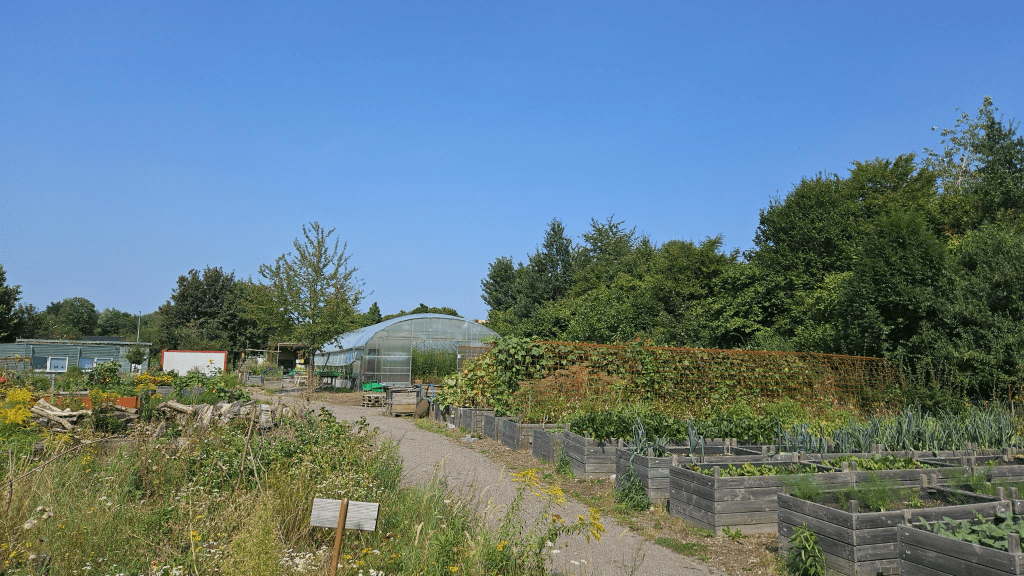
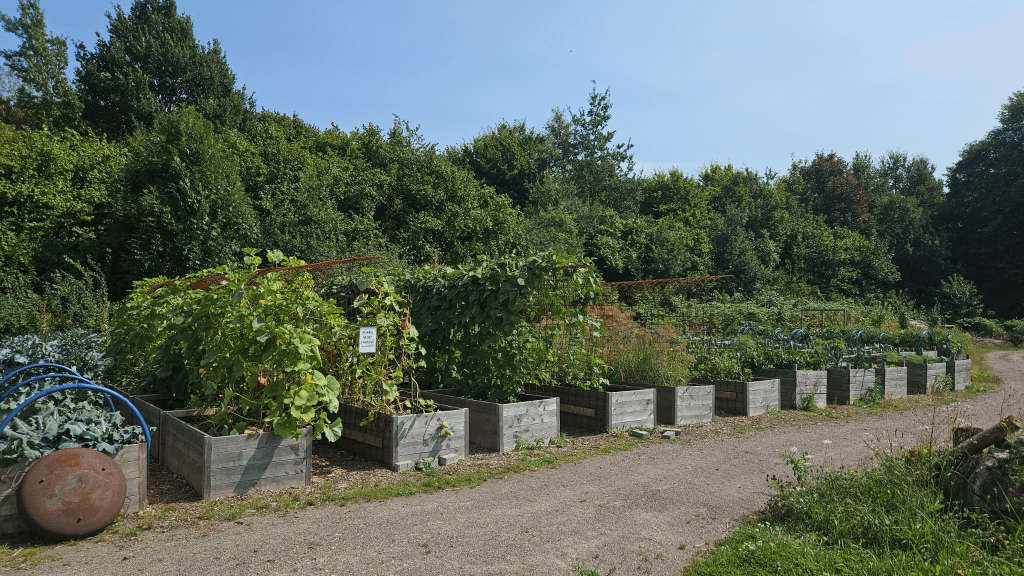
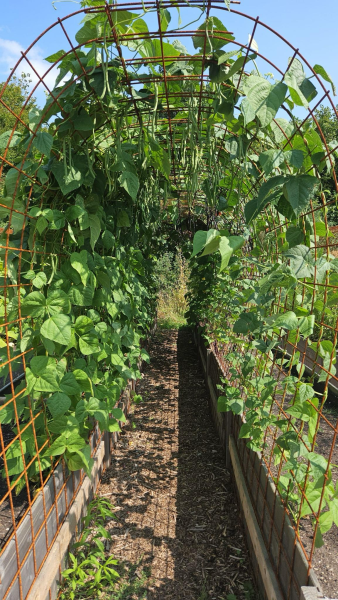
GrünFrau is located in the middle of an industrial area in Dortmund-Schüren. In more than 100 – some are covered in a greenhouse – raised beds, a wide variety of vegetables are grown that can be harvested and purchased by the local population.
***


Community-supported agriculture “Kümper Heide”
In Dortmund, there are several community-supported agriculture (CSA) (SoLaWi for Solidarische Landwirtschaft in German) initiatives that focus on sustainable cultivation and nutrition, promoting local food production while ensuring a more equitable distribution of food. This collaborative farming model aims to strengthen the link between producers and consumers. In this model, local farmers join forces with a group of people who want to buy fresh and sustainably produced food on a regular basis.
The special feature of community-supported agriculture is that members finance the farm through fixed contributions and are therefore directly involved in the production costs. In return, they receive a regular share of the harvest, which can vary seasonally. This not only gives the farmers planning security, but also allows them to focus more on ecological and socially sustainable farming methods.
Through regular opportunities to participate in the farm operations, a variety of events, monthly plenums, workshops and communication with consumers, the connection between farmers and members of the community goes far beyond providing fresh vegetables. It fosters greater understanding of sustainable food production, knowledge transfer and how food systems can strengthen the bonds of community.
One of the best-known initiatives is the CSA “Kümper Heide” project in Dortmund, which has been running for more than ten years with and on the Schulte-Tigges educational farm. This initiative allows consumers to invest directly in agricultural production and receive fresh products on a regular basis.
How does the CSA Kümper Heide work?
A producer-consumer community is formed for a fiscal year – all interested parties sign up for their share of the harvest in a bidding round. Here the principle of solidarity applies: Based on a reference value for a whole share, members can choose their monthly contribution to finance the following financial year: This means that people who contribute more than the suggested amount can enable other people with less financial means to participate in the SoLaWi. The sum of all shares covers the pre-calculated budget for food production.
Thus, CSA not only contributes to a sustainable food system, but also builds community and an understanding of the origins of the food that ends up on our plates every day.
What Kümper Heide participants have to say:
“Perhaps it could also add value to increasing resilience and therefore also to food security. Because we have seen in recent years that the entire global supply chain is also becoming more and more susceptible to many risks, whether it’s war or extreme weather events or some kind of hacking or I don’t know. So, it’s probably a good thing if you can also rely on a certain degree of self-sufficiency, i.e. your own food supply.”
“I mean, where is the justice in the current economic system? Both on the customer side and on the producer side. Clearly, it’s not fair on the producer’s side. And not on the consumer side either, because I think the cheap stuff is often just not healthy and not good for your diet.”
“We always end our presentations with the fact that we have solidarity between consumers through the bidding rounds, and that we have solidarity between consumers and producers, that even bad years are absorbed, and that in good years we don’t pocket the profits, but that they go entirely to the people, and then solidarity with the environment is also taken into account, with soil life, water and biodiversity.”
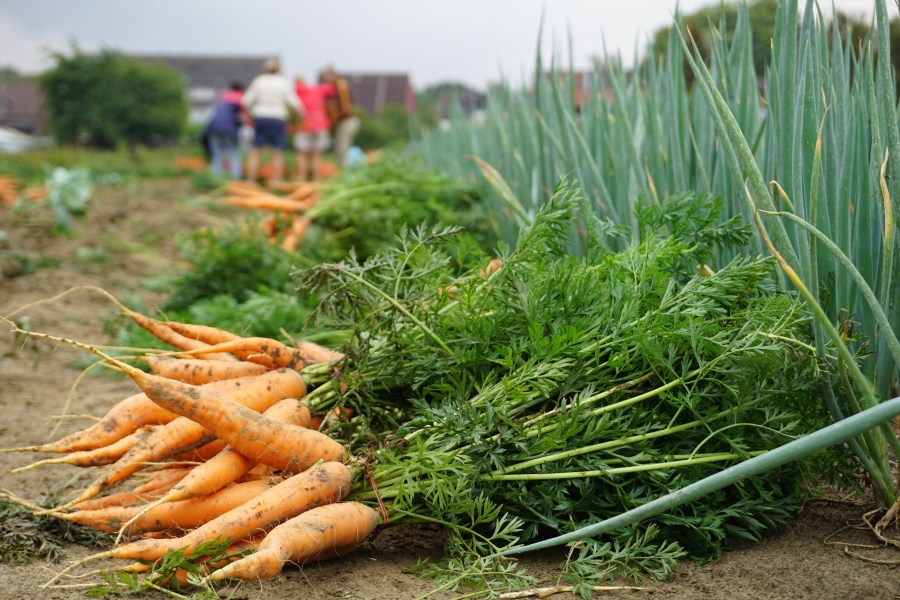
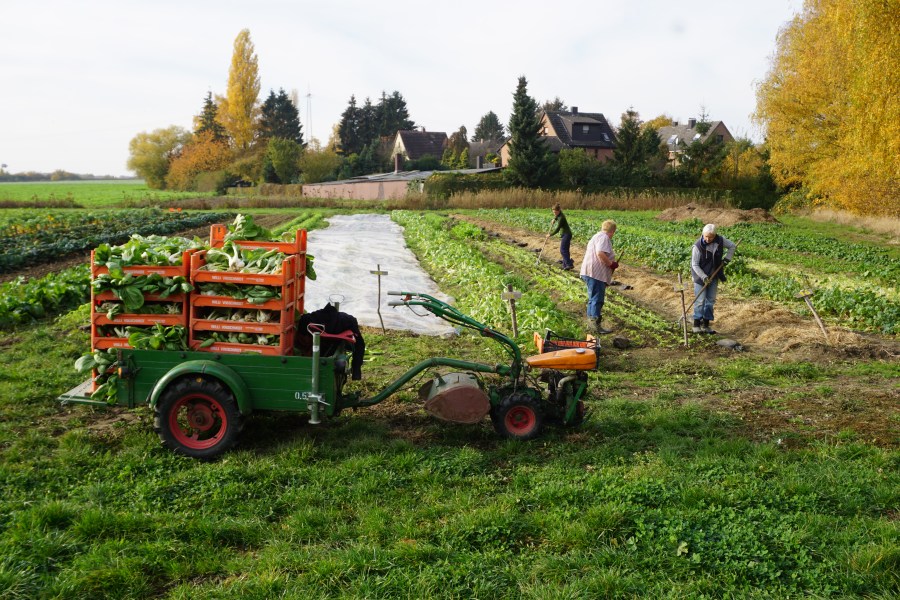
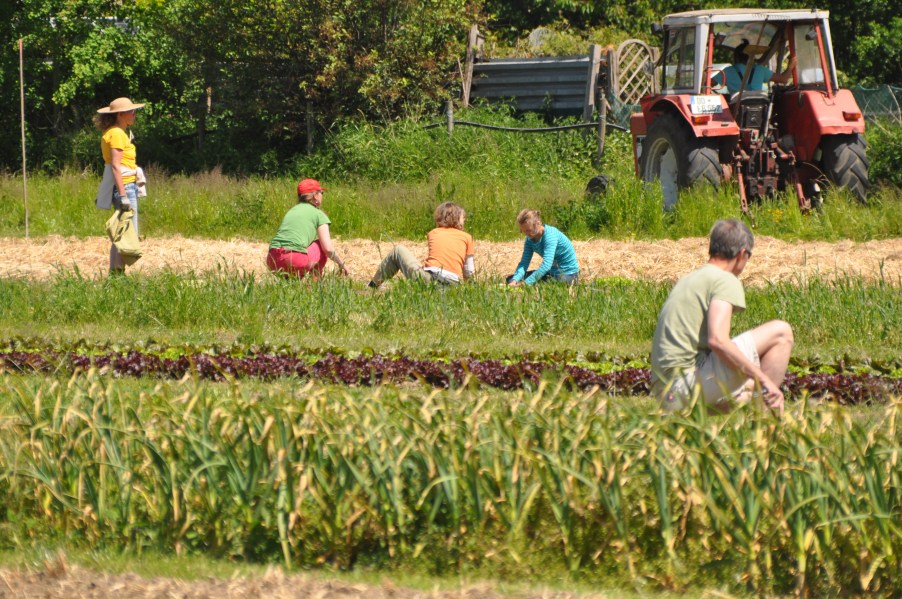
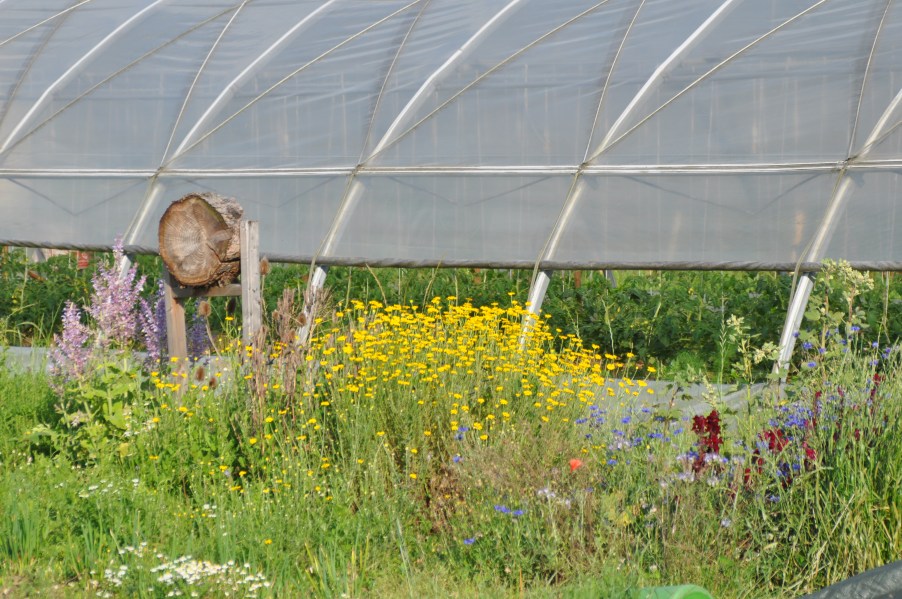
The SoLaWi Kümper Heide in the north of Dortmund is a solidarity-based association of farmers and gardeners and consumers that now supplies almost 200 households with seasonal vegetables from the region. The farmers and gardeners are employed by SoLaWi, but interested and motivated citizens are always welcome to garden and help out on a voluntary basis.
***
These initiatives are three of many in Dortmund that are working in the field of urban agriculture and food security. They illustrate how urban agriculture can contribute to food security by fostering community involvement, promoting sustainable practices, and enhancing the resilience of local food systems. They represent positive examples of integrating equity into urban agriculture, addressing both social and environmental aspects of food production.
We would like to thank all the interviewees who took the time to talk to us in addition to their daily work and who gave us really interesting insights into their daily work and their challenges! These insights drive and motivate us to use research to drive change and make the food system more just.
In the next phase of the project, we want to use these experiences to discuss the identified indicators of food security in urban agriculture with local initiatives and to develop a set of indicators that urban regions can use to assess the equity impact of specific urban agriculture plans.
 justgrowproject.org